


What is a dental bridge?
When a tooth is missing, there are several ways to replace it.
A dental bridge is one option that uses neighbouring teeth to support a replacement tooth. In suitable cases, it provides a fixed solution without the need for surgery.
Treatment is planned with consideration of both the missing tooth and the condition of the surrounding teeth.
A bridge replaces a missing tooth by anchoring to adjacent teeth.
The supporting teeth are prepared, and a connected restoration is placed to fill the gap and restore function.

When are bridges considered?
Bridges may be appropriate when:
-
Adjacent teeth already have large fillings or require crowns
-
Implant placement is not suitable or not preferred
-
A fixed (non-removable) option is desired
-
There is a need to restore function across a gap
Each case is assessed individually to determine suitability.

Considering the Whole Situation
A bridge does not just replace a missing tooth. It also involves the neighbouring teeth.
We consider:
-
The condition of the supporting teeth
-
Bite forces and load distribution
-
Long-term maintainability
Where adjacent teeth are already restored or compromised, a bridge may be a reasonable option. Where they are healthy, other approaches may be considered.
Choosing Between Options
There is often more than one way to replace a missing tooth.

Dental Implants
replace the tooth independently without involving adjacent teeth

Bridges
rely on neighbouring
teeth for support
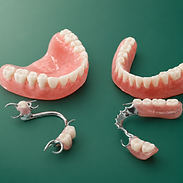
Dentures
provide a removable alternative
Each option has its own considerations. The choice depends on the clinical situation, patient preferences, and long-term outlook.
How Bridges Fit into Overall Treatment
Bridges are considered as part of a broader restorative plan.
In some cases, tooth position or spacing may influence how a bridge is designed. In others, treatment may be staged or combined with other approaches to achieve a more stable result.
The aim is to restore function while maintaining the health of the supporting teeth.
What to Expect
Dental bridges are a reliable way to replace missing teeth and restore your smile. The process is planned carefully to ensure a comfortable fit and natural-looking result.

1. Assessment
We evaluate the missing tooth space and the condition of adjacent teeth.
2. Preparation
Supporting teeth are prepared to receive the bridge.
3. Impression / Scan
A digital scan or impression is taken.
4. Placement
The bridge is fitted and adjusted for comfort and function.
5. Review
Follow-up to ensure stability and maintenance.
