


Restorative dentistry is often about balance.
While modern dentistry allows us to replace or rebuild teeth in many ways, not every situation requires extensive treatment. Where possible, we aim to preserve natural tooth structure and choose options that are appropriate for the long term. Treatment is planned with both function and durability in mind.
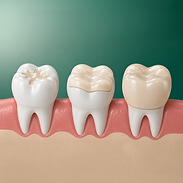
Our treatment is considered along a spectrum, from repairing and preserving existing teeth, to replacing them when necessary.
Repair

Replacement


Planning Before Treating
Restorative treatment is rarely just about a single tooth.
We consider:
-
The condition of surrounding teeth
-
Bite relationships and function
-
Long-term maintainability
In some cases, this may involve staging treatment or coordinating with other disciplines such as orthodontics to achieve a more stable outcome.

Preservation Where Possible
Whenever appropriate, preserving natural teeth remains a priority.
Procedures such as onlays, crowns, or root canal treatment may allow a tooth to be maintained rather than replaced. Even when replacement is required, treatment is planned to minimise unnecessary intervention.
In many situations, preserving a natural tooth — even if it requires root canal treatment — may be more appropriate than replacing it, depending on the long-term outlook.
When is replacement needed?
Replacement may be considered when:
-
A tooth is no longer restorable
-
Teeth are missing and function is affected
-
There is progressive breakdown affecting bite or stability
Options are discussed clearly, taking into account function, expectations, and maintenance over time.

What to Expect
We’ll take the time to listen, understand your concerns, and guide you through your options clearly. Our goal is to help you feel comfortable and confident about your next steps.

