


What is root canal treatment?
When the inner part of a tooth becomes inflamed or infected, it can lead to pain, swelling, or sensitivity.
Root canal treatment is carried out to remove the source of infection and preserve the remaining tooth structure. In many cases, this allows the tooth to continue functioning for years.
Root canal treatment involves cleaning and disinfecting the inside of the tooth, followed by sealing it to prevent further infection.
The outer structure of the tooth is then restored, often with a crown, to provide strength and long-term stability.
When is it needed?
Root canal treatment may be recommended when:
-
There is persistent toothache or sensitivity
-
The tooth is infected or has an abscess
-
There is deep decay or a large fracture
-
The nerve of the tooth has been compromised
Not all cases present with pain, and some may be identified during routine examination.

Precision Matters
Root canal treatment involves working within very fine and complex internal structures.
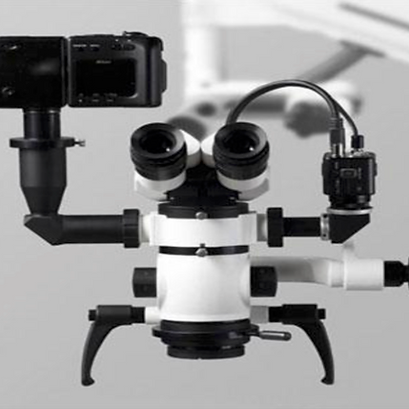
To improve accuracy and predictability, we utilise a dental microscope in more complex cases. This allows for enhanced visibility of the root canal system, helping us to:
-
Identify fine or additional canals
-
Clean and disinfect more thoroughly
-
Perform treatment with greater precision
At the same time, treatment decisions remain measured — taking into account the condition of the tooth, its long-term prognosis, and how it will be restored after treatment.

Seeing What Would Otherwise Be Missed
Root canal systems can be intricate, with fine canals that are not always visible to the naked eye.
In more complex cases, the use of a dental microscope allows for improved visualisation of these structures. This helps in identifying additional canals, managing difficult anatomy, and carrying out treatment with greater precision.
While not every case requires it, magnification becomes particularly useful when accuracy is critical.
The aim is not just to complete treatment, but to do so with a level of detail that supports long-term success.
After Root Canal Treatment
A tooth that has undergone root canal treatment may become more brittle over time.
In many cases, a crown is recommended to reinforce the tooth and protect it from fracture, allowing it to function more predictably in the long term.
Root Canal vs Extraction
In some situations, both options may be considered.
Where appropriate, preserving a natural tooth through root canal treatment may provide a more conservative approach. In other cases, extraction and replacement may be more suitable.
The decision depends on the condition of the tooth, surrounding structures, and long-term prognosis.
What to Expect
We understand that root canal treatment can feel intimidating, but it’s a safe and effective way to relieve pain and protect your tooth.
Our team will take the time to keep you comfortable and informed every step of the way.

1. Assessment
We evaluate the tooth and surrounding structures, often with X-rays.
2. Treatment
The infected tissue is removed and the inside of the tooth is cleaned and sealed. In more complex cases, magnification may be used to improve precision.
3. Restoration
The tooth is restored, often with a crown, to provide strength and function.
4. Review
Follow-up to ensure healing and stability.
